
Biophilic living room decor is more than a trend—it’s a research-backed way to bring the calming, health-boosting power of nature into the heart of your home. Whether you rent or own, creating a living room inspired by the outdoors is proven to enhance comfort while cutting stress, all while adding unique personality to your space.
Key Takeaways
- Biophilic living room design fosters well-being and reduces stress, with most occupants reporting noticeable comfort improvements.
- Smart choices in layout, materials, and lighting maximize results and minimize pitfalls like plant loss, mold, and extra maintenance.
- Affordable, renter-friendly methods—including modular plant screens and DIY garden corners—deliver big impact without permanent renovations.
- What Is Biophilic Living Room Decor and Why Try It?
- Step-by-Step Guide: How to Build a Biophilic Living Room (Even in Rentals)
- Advanced Analysis & Common Pitfalls: What To Watch For
- Conclusion
- Frequently Asked Questions
What Is Biophilic Living Room Decor and Why Try It?
Biophilic living room decor means intentionally connecting your main living space to nature through greenery, natural light, and organic materials. It’s not just about “adding plants”—it’s about creating a holistic environment that supports mental refreshment, comfort, and even small health benefits.

Recent research highlights powerful psychological effects. According to studies on biophilic design in homes and other buildings, rooms rich in greenery, daylight, and wood or bamboo accents produce reliable improvements in perceived well-being and measurable drops in stress, such as lower cortisol and improved comfort scores.[1] While few studies give a precise percentage for just living room setups, surveys consistently show that a majority—often 60–80%—of people in biophilic homes feel less stressed and more at ease.
That comfort isn’t just “in your head.” Physiological tests (like skin conductance) confirm real relaxation in biophilic interiors, whether built for rest, work, or recovery. You don’t need a massive renovation—or even a green thumb—to benefit from this smart, evidence-based approach.
Step-by-Step Guide: How to Build a Biophilic Living Room (Even in Rentals)
Ready to transform your space? Here’s a realistic plan to create powerful biophilic living room decor, whether you own or rent—adaptable for any size or budget.
-
Assess Light and Layout
- Observe natural sunlight throughout the day. Where does it reach most easily? Which corners stay dim?
- Prioritize windows, then work outwards. Place your largest or most light-hungry plants within two meters of the brightest window.
- For dim or north-facing rooms, plan on supplementing with LED grow lights (these are now compact and attractive).
-
Anchor with Signature Greenery
- Pick 2–3 “hero” plants or a small plant wall as your focal point—these draw the eye and set the natural tone.
- Choose reliable, low-maintenance species such as snake plants, pothos, or spider plants. For vertical impact without risk to walls, consider modular plant screens on casters or tension-rod systems that don’t require drilling.
-
Layer In Textures and Materials
- Add planters, shelves, or baskets in rattan, bamboo, or reclaimed wood for warmth and authenticity. Bamboo and reclaimed wood hold up particularly well where occasional moisture is likely.
- Mix in smooth river stones, pebbles, or sand under planters to reinforce the nature vibe and help with humidity management.
-
Boost Daylight and Add Lighting
- Keep windows as clear as possible. Use sheer curtains to protect privacy but allow sunlight to pass through.
- Install mirrors or pale surfaces opposite windows to reflect more light onto your greenery.
- Supplement with energy-efficient LED grow lights (choose full-spectrum, warm-to-neutral white for comfort and plant health). A 30-watt fixture usually costs less than $3/month to run.
-
Style for Maintenance and Flexibility
- Use saucers, trays, and waterproof liners under all planters—especially on shelves or near electronics.
- Group plants by water needs, and establish a maintenance spot (e.g., rolling cart) for pruning, cleaning, and transplanting.
- If you rent, opt for furniture-based solutions instead of drilling; magnetic planters and tension-rod shelving offer instant green walls without risk. Use a striped area rug or a peel and stick textured wallpaper to introduce further biophilic layers while keeping the look rental-friendly.
-
Edit and Refresh Seasonally
- Rotate struggling plants out, or relocate them to better light. Refresh pots, moss, or decorative accents every few months.
- Rethink your big statement each season: Add a tonal color-drenched wall, a new reclaimed wood side table, or a fresh set of hanging baskets. Timely updates keep your setup from feeling stale.
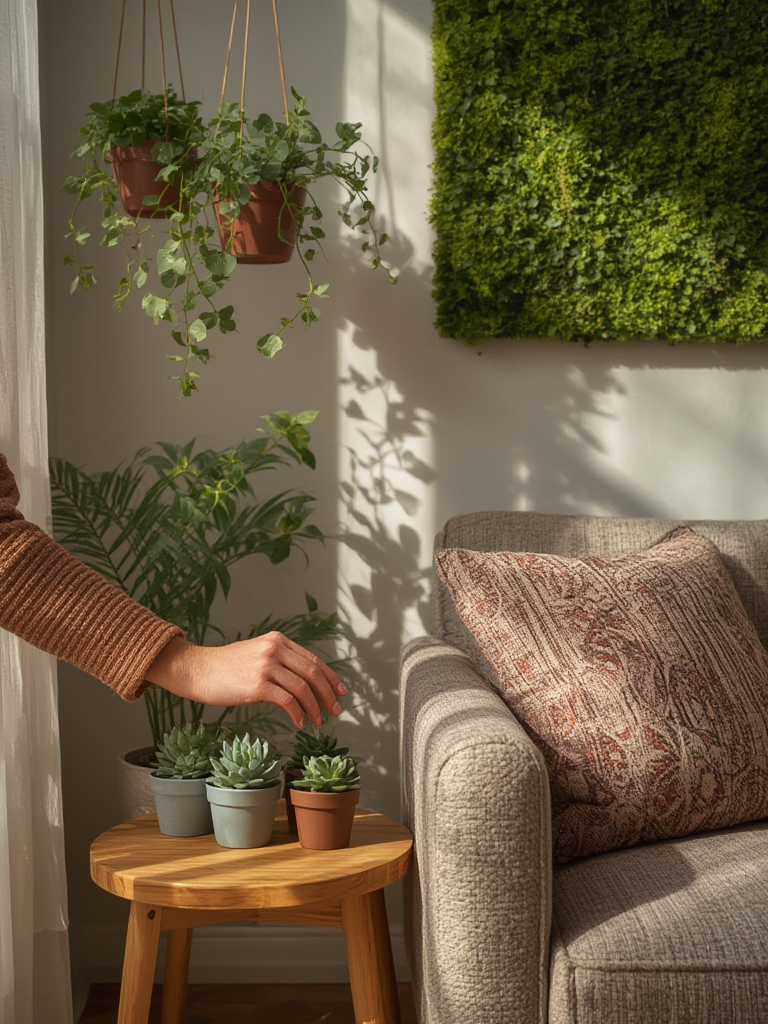
For budget-friendly flexibility, build an indoor garden corner with a bamboo or metal stand and a variety of trailing and upright plants. For higher-impact results, install a modular living wall system—but always factor in weight, water management, and nearby furniture.
Don’t forget to experiment with small touches (moss frames, smooth stone vases, earthy-toned throws) to amplify both comfort and visual depth. For added personality, layer in 3d textured wallpaper or botanical-themed wall decals behind your plant arrangements.
Advanced Analysis & Common Pitfalls: What To Watch For
Even the best biophilic living room decor can hit a few bumps. Research and homeowner experience reveal these are some of the most frequent issues and how to handle them:
- Insufficient or Uneven Light: Many new setups underestimate just how much light even “low light” plants need. Corners far from windows often lead to sad, leggy foliage unless you use supplemental lighting. Consider mirrors, grow lights, or moveable plant screens to chase available sun.
- Humidity and Mold: Dense groupings or living walls can increase local humidity, which may cause condensation or promote mold/mildew—especially near windows or walls with poor airflow. Always use saucers, waterproof backings, and regularly check for spots of mold behind frames or shelves.
- Pest Outbreaks: Fungus gnats, spider mites, and mealybugs thrive where soil stays wet. Remove fallen leaves quickly and avoid overwatering to keep pests at bay.
- Water Damage: Drips, wall stains, or swelling of wooden sills can happen with poorly installed or overwatered setups. Use high-quality liners, never let water pool under pots, and choose materials that hold up to occasional splashes—reclaimed wood and sealed bamboo are both solid choices.
- Rental Woes: Heavy or mounted plant walls can cause landlord headaches. Go for movable plant screens on casters or no-drill vertical systems to sidestep deposit risk and move easily at lease-end.
- Unexpected Maintenance: Living walls can be more work than expected, requiring regular trimming, plant replacements, pump checks, and cleanings. Budget both time and money for annual upkeep—typically $150–540/year for DIY setups, more for pro maintenance.
| Material | Indoor Lifespan | Relative Price | Upkeep Level | Key Risks |
|---|---|---|---|---|
| Rattan | 10–20+ years | Similar or slightly lower than new hardwood | Medium | UV fading, drying, or mold |
| Reclaimed wood | Decades | Equal to or higher (when processed) | Medium | Prior damage, moisture |
| Bamboo | 10–25+ years | Slightly less to similar | Medium–Low | Moisture changes, scratches |
Cost Overview: DIY plant walls (including plants, containers, simple irrigation, and lights) typically run $340–$920 up front, with annual maintenance around $150–$540. Modular garden corners are usually $320–$1,080 to set up, with lower yearly costs. Professionally installed walls cost more but deliver turnkey results with optional service contracts.[2]
Choose plant species wisely. Snake plant, pothos, spider plant, ZZ plant, peace lily, and Chinese evergreen remain the best low-maintenance options—with some real, though limited, impact on perceived air quality.[3] If allergies are a concern, avoid too-tight groupings and try regular cleaning to limit dust and spores.

Conclusion
Biophilic living room decor isn’t just pretty—it’s proven to nurture mental well-being and boost comfort, especially when you plan smartly for light, moisture, and easy-care materials. With flexible options from rolling plant walls to no-drill vertical gardens, anyone can create a revitalizing oasis—even in a rental. Try layering natural textures (like rattan, bamboo, or reclaimed wood), and choose reliable plants for minimal fuss and maximum relaxation. Explore more actionable ideas using striped rugs or a textured wallpaper accent to round out your nature-inspired space. Ready to try biophilic living room decor? Start with what you have, and let nature transform your everyday living for the better.
Frequently Asked Questions
What are the best low-maintenance plants for a biophilic living room?
Snake plant, pothos, ZZ plant, spider plant, peace lily, and Chinese evergreen are ideal for most living rooms. They tolerate lower light and infrequent care, making them reliable even for beginners.
How can renters create biophilic living room decor without drilling?
Use modular plant screens on casters, tension-rod shelving, or magnetic planters that attach safely to metal surfaces. These solutions add vertical greenery without damaging walls—perfect for rentals or frequent movers.
Is a living plant wall hard to maintain?
Living walls need more upkeep than single pots—expect regular pruning, plant replacements, and monitoring for pests or mold. DIY options can be manageable with simple watering systems. Always use saucers, waterproof liners, and group plants by care needs for best results.
What materials are best for furniture near plants?
Bamboo and reclaimed wood are both durable and water-resistant when properly sealed, making them excellent choices for plant stands or shelves. Rattan is also suitable but should be kept dry to prevent mold and maintain longevity.
How much does a biophilic living room setup cost?
DIY plant corners or walls typically start at $320–$1,000 upfront, with annual upkeep from $80–$540. Professionally installed living walls are more expensive but include setup and optional maintenance contracts.

[…] 2024. Mixing in nature-inspired hues (olive, sage, ochre) creates warmth and complements trending biophilic decor styles. For added interest, layer against a striped area rug or textured wallpaper for […]
[…] biophilic touches with natural materials. For small-city apartments, add greenery with easy-care biophilic decor ideas or a small indoor garden […]
[…] grounded, health-focused design inspiration, check biophilic living room decor tips that translate […]
[…] living room, combine moss decor with striped area rugs, textured wallpaper, and other biophilic living room decor ideas for a layered, wellness-oriented […]
[…] cottage decor ideas for creative ways to blend acoustic panels with art and design, or check out biophilic living room decor for additional wellness […]
[…] this fits with other wellness and mood-forward upgrades? Discover how textured throw pillows and biophilic living room decor ease stress and create inviting, healthy […]