
Textured throw pillows are driving the biggest trends in modern decor, combining bold tactile design with cozy comfort. Their surging popularity brings both opportunities and challenges—style upgrades, yes, but also real-world maintenance and quality pitfalls few buyers expect. Here’s the realistic breakdown you actually need.
Key Takeaways
- Textured throw pillows—especially bouclé and chunky knit—now lead decorative pillow market trends across Europe and North America, but material quality and construction vary widely.
- Common mistakes include choosing style over durability, ignoring insert quality, and not factoring in ongoing care, particularly with light colors or open-weave designs.
- Pillows with removable, machine-washable covers, higher-quality filling, and abrasion-tested fabrics deliver the best long-term satisfaction—plan for more upkeep than with flat cotton or linen.
- What Makes Textured Throw Pillows So Popular?
- How to Choose and Style Textured Throw Pillows (Step-by-Step)
- Real-World Pitfalls, Quality Differences, and Maintenance Challenges
- Conclusion
- FAQ
What Makes Textured Throw Pillows So Popular?
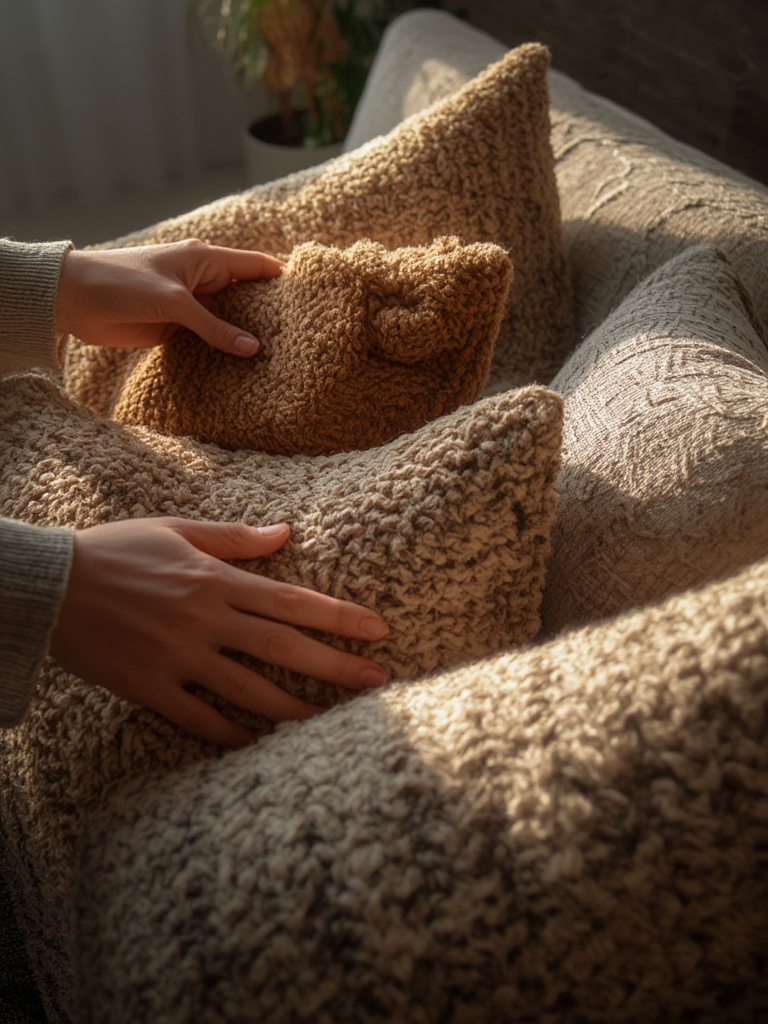
Textured throw pillows are reshaping soft decor trends globally, thanks to their tactile appeal and the rise of “cozy maximalism,” Scandinavian minimalism, and social-media-driven home styling. Latest data shows that textured pillow designs—including bouclé, chunky knits, and heavy weaves—now lead the decorative cushion segment, reflecting a consumer shift towards visually rich, touchable accents over flat basics.
Between 2024 and 2032, the worldwide market for decorative pillows is projected to reach up to $10.2 billion, growing steadily at 5–7% CAGR. Industry reports spotlight textures’ dominance, with bouclé and chunky knits tracking the broader move to tactile, inviting decor instead of just color or pattern.
What’s driving this? Easy living room refreshes (think “sofa swaps” with new cushions, not new furniture), eco-fabrics like recycled polyester and organic cotton, and a demand for unique, personalized spaces. The result: Textured throw pillows are now not only a fast way to update your look—they’re the new baseline for styling, especially when paired with neutral color palettes, earth tones, or bold geometric shapes. For layered interiors, they offer instant coziness without a full renovation.

How to Choose and Style Textured Throw Pillows (Step-by-Step)
-
Define Your Sofa/Room Color Palette
Start with your sofa’s main color and your living room vibe. Neutrals (ivory, beige, taupe), earth tones (clay, olive), and desaturated hues (dusty blue, mauve) are trending for bouclé and chunky knits. For bolder looks, mix in a deep accent (navy, charcoal, forest green). -
Select the Right Texture
Bouclé and sherpa provide a soft, nubby look; chunky knits add extra depth and visual interest. Need more inspiration? See our textured wallpaper trends for pairing ideas with walls and decor. -
Pick Fill and Size
Prioritize inserts: Firm, high-resilience (HR) polyfill or down/feather blends better retain shape, especially for lounging and back support. Go for popular sizes, such as 45×45 cm or lumbar 30×50 cm, to allow easy layering or swapping. Oversized (55×55 cm) options make a bolder statement on deep sofas. -
Inspect Fabric Composition and Construction
Look for blends with wool, cotton, or linen (not just 100% polyester) for a plusher, longer-lasting surface. Check for double-stitched seams, invisible zippers, and removable covers. Read labels for machine washability, especially if you have pets or children. -
Layer and Position Intentionally
Start with large squares at the back, lumbars in front. Mix tight bouclé, chunky knit, and simple weaves to add depth without crowding the sofa. -
Plan Cleaning and Maintenance
Opt for pillows with machine-washable removable covers or at least clear care guidance. Consider a “rotation” routine: Fluff inserts, rotate pillows weekly, and spot clean as needed. Know that light bouclé shows stains more; chunky knits may snag more easily. Plan Cleaning and Maintenance -
Balance Textures with Other Decor Elements
Pair textured pillows with smooth textiles such as striped area rugs or color drenched rooms for extra dimension.
Want next-level layering? Integrate other sensory elements like moss wall art or tactile wallcoverings.
Real-World Pitfalls, Quality Differences, and Maintenance Challenges
Not all textured throw pillows perform equally—many buyers fall into the traps of style over durability, poor material choices, or unrealistic upkeep. Here’s what separates a lasting tactile upgrade from buyer regret.
Common Problems and Complaints
- Shedding and Pilling: Cheap chunky knits and low-quality bouclé covers often shed fibers and pill after a few weeks. Expect fuzz on clothes and sofas when yarns are loosely spun or synthetic-heavy.
- Snagging and Runs: Large loops, open weaves, or low-density fabrics can catch on rings, zippers, or pet claws—leading to pulled threads and “destroyed” pillows in high-traffic spaces.
- Shape Collapse: Flat, lumpy, or “board-like” inserts (often direct-stuffed, low-density polyfill) quickly lose loft. Corners collapse, covers get baggy, and silhouette suffers.
- Cleaning Hassles: Spot-clean-only covers frustrate buyers. Many textured pillows trap dust, pet hair, and crumbs—especially lighter bouclé or plush chunky knits. Light shades magnify stains; machine washing risks matting or shrinkage if the label says “spot clean only.”
- Color Surprises: Online images don’t always match reality; cream or off-white bouclé may look yellow or gray, bold colors arrive muted. Dye methods matter. Yarn-dyed is more reliable than piece-dyed.
- Itchy or Noisy Textures: Some synthetic-heavy fabrics squeak or feel rough, making the pillows “decorative only”—not for actual use or naps.
High-End vs. Budget Textured Throw Pillow Comparison
| Feature | High-Quality Bouclé | Low-Cost Bouclé/Chunky Knit |
|---|---|---|
| Fabric Content | Wool, cotton, linen blends + poly; high gsm, tight loops | 100% synthetic; loosely woven, lower weight |
| Insert Type | Dense HR polyfill or feather/down, separate insert | Loose polyfill or foam, direct-stuffed, no insert |
| Seams & Closure | Invisible zipper, strong double-stitching, overlocked seams | Weak seams, visible stitching, fragile zippers |
| Washability | Removable, often machine-washable, clear label | Spot-clean only; prone to matting or shrinking |
| Durability Tests & Certifications | Martindale/Wyzenbeek score, OEKO-TEX / GRS | None or not stated |
| Price Range | Mid to premium (€25–120 / $30–200+) | Budget (€10–20 / $10–25) |
Market Trends & Buying Shortcuts
Not sure which color or pattern to use? Neutrals—especially off-whites, greige, and taupe—anchor most layered living rooms in 2024. Mixing in nature-inspired hues (olive, sage, ochre) creates warmth and complements trending biophilic decor styles. For added interest, layer against a striped area rug or textured wallpaper for sophisticated contrast.
While Europe, North America, and the Nordics lead the textured pillow market—in both spending and variety—always check that higher cost really means higher construction quality. Scarcity of objective abrasion or pilling ratings is a common red flag. Stick with brands that share these numbers, or at least show evidence of robust construction and care labels.
For more on the scale and direction of the decorative pillow industry, see the MarketResearchFuture report, DataHorizzon Research, and DataInsightsMarket.

Conclusion
Textured throw pillows—especially bouclé and chunky knit—deliver the fastest, most impactful home styling refresh, but also require smart product choices and regular care. Prioritize material and insert quality, look for clear care guidance, and plan for slightly more maintenance than with flat weaves. With the right approach, textured throw pillows will outlast fast decor trends and make any sofa or bed both stylish and inviting.
Ready to layer texture and comfort into your living room? Explore certified, removable-cover options—and don’t forget to match insert and cover size for a designer look every time.
FAQ
Are textured throw pillows practical for homes with pets or kids?
Bouclé and chunky knits are cozy and on-trend, but can be prone to snagging and trapping pet hair and crumbs. Choose tight, small-loop bouclé and seek removable, washable covers. Avoid oversized hand-knits in high-traffic areas.
What is the best insert for comfort and shape retention?
High-resilience (HR) polyfill or feather/down blends in separate cotton or nonwoven inserts offer the best comfort and keep pillows plump. Direct-filled pillows with loose fiberfill quickly flatten and lose their shape.
Can you machine wash textured throw pillow covers?
Only if the label explicitly says so. Many bouclé or chunky knit covers are spot-clean or dry-clean only—machine washing may cause matting or shrinking. Prioritize removable covers that are labeled as machine washable for easier cleaning.
Why do online photos of bouclé or chunky knit pillows often misrepresent color?
Textured fabrics catch and reflect light differently than flat weaves. Creams can look yellow or gray; digital photography and screen variation also affect appearance. When in doubt, request fabric swatches or read customer reviews for real-life photos.
How do textured throw pillows compare to velvet or linen pillows?
Bouclé offers more visual depth and can better hide small wrinkles or lint than linen, but is harder to deep-clean if heavily stained. Velvet pillows show nap marks but resist pilling. Each texture has tradeoffs for durability, care, and comfort.
