
Color drenched room design is rapidly growing as a bold trend in home interiors, sparking curiosity and questions from homeowners and renters looking for dramatic impact—but the approach brings both excitement and real-world challenges.
Key Takeaways
- Color drenched rooms are trending in 2024, but only a niche minority of homeowners have fully adopted the look.
- While visually stunning, color drenching poses real issues with maintenance, lighting, and resale flexibility.
- Understanding color psychology, finish selection, and practical upkeep is crucial before committing to a monochromatic space.
- What Is a Color Drenched Room?
- How to Create a Color Drenched Room: Step-by-Step
- Advanced Analysis & Common Pitfalls
- Conclusion
- FAQ: Color Drenched Rooms
What Is a Color Drenched Room?
A color drenched room is an interior where walls, ceilings, and often trim, doors, and even built-ins are painted in the same hue—sometimes mixing sheens, but always creating a fully immersive, monochromatic environment. The intent is to eliminate hard visual breaks and let a single color envelop the space for a dramatic, cohesive effect.
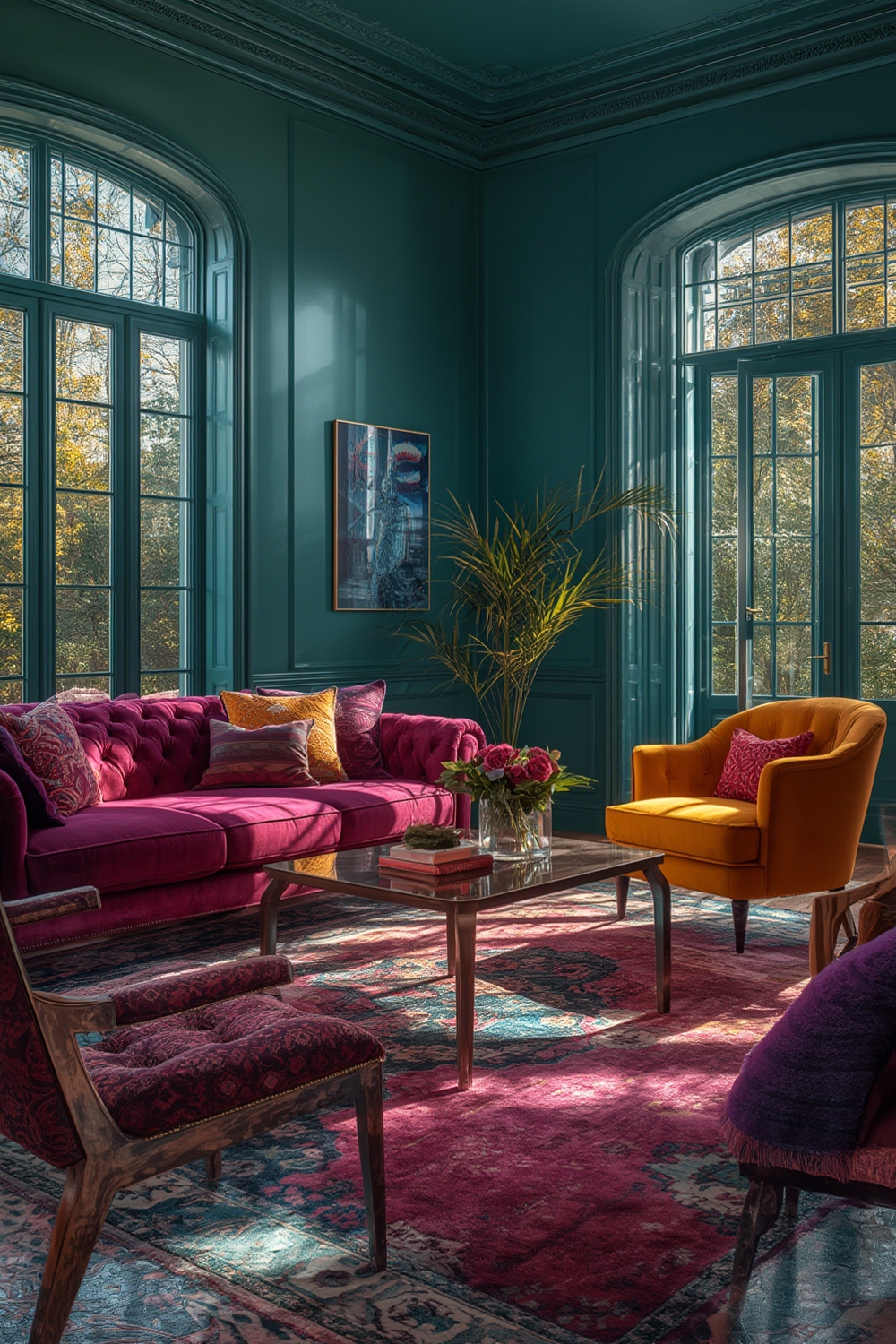
Designers and paint brands widely describe color drenching as “about to be big” for living rooms and bedrooms in 2024, driven by rising search trends and client requests for moody, all-over color. However, neither paint manufacturers nor interior design research offers statistically robust numbers—while intent is up, the actual adoption rate for full color drenched rooms remains modest and quantitatively unreported [source], [source]. Most examples you see online are designer showcases or single-room client features, not yet the average home.
When done thoughtfully, color drench transforms plain settings into gallery-like retreats or cozy cocoons. But it brings higher stakes than neutral paint: lighting, finish, and future flexibility all get more complex.
How to Create a Color Drenched Room: Step-by-Step
Ready to take the plunge? Here is a detailed, actionable process—plus pro-level tricks most blog posts overlook.
Step 1: Research and Choose the Right Hue
For living rooms, opt for rich blues, greens, or warm earth tones. For bedrooms, muted or dusty shades (such as deep navy, olive, mauve, or taupe) tend to support relaxation and avoid overstimulation at bedtime. Avoid high-chroma reds and bright oranges in bedrooms; studies suggest they boost alertness and can disrupt calm. Before committing, review designer examples and professional color guides for inspiration.
Step 2: Test Samples in Real Lighting
Paint large, foam-board samples of your chosen color. Move them from wall to wall and ceiling, and view in all lighting conditions (morning, dusk, artificial light). Drenching exaggerates undertones and makes colors shift dramatically—what looks cozy during the day may feel claustrophobic at night. Don’t skip this step.
Step 3: Select Paint Types and Finishes
Matte or dead-flat is recommended for walls and ceilings if you want a velvety, seamless look, but these marks easily. Eggshell offers more durability, especially for family spaces. Use a higher sheen (satin or semi-gloss) for trim and doors for better scrub resistance. Many brands, including Farrow & Ball and Benjamin Moore, offer deep-base formulas specifically for these saturated looks.
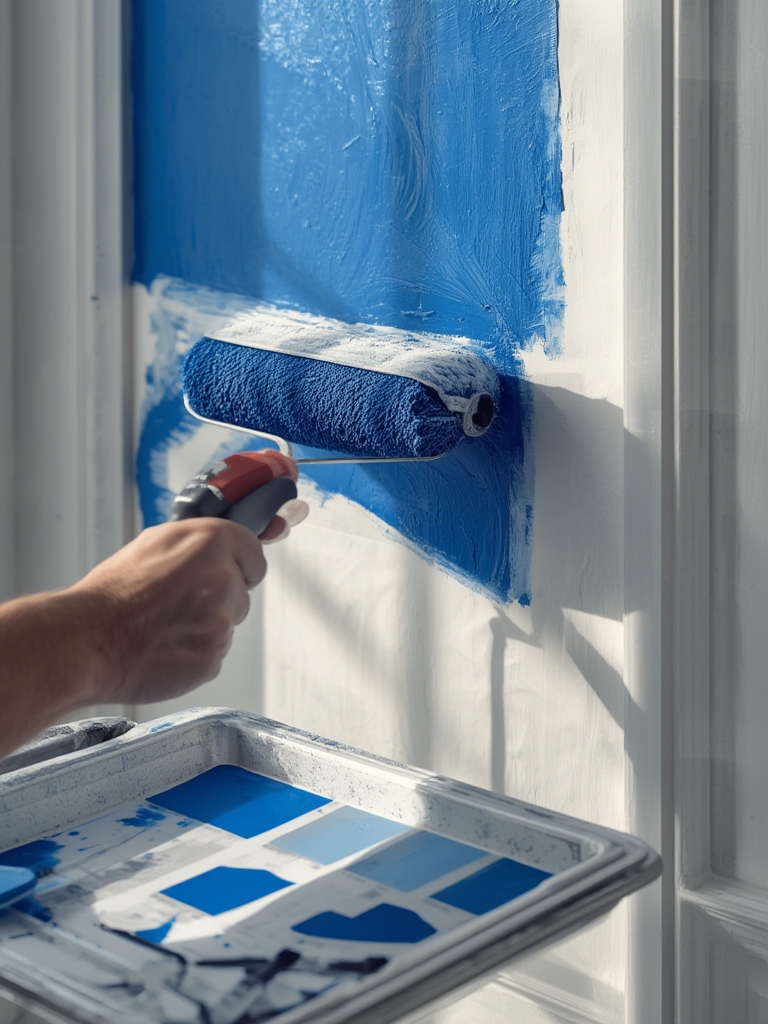
Step 4: Prep and Prime Proactively
Dark colors show surface flaws and patchiness. Fill and sand all dents, seams, and nail pops. If moving from a light to a deep color or changing sheen, apply a tinted primer—especially crucial for achieving rich, even color and reducing coat count. Discuss with your contractor or local paint store for the best primer-paint combos.
Step 5: Plan the “All-in-One” Execution
To truly “drench” the space, eliminate white trim, contrasting ceiling lines, and unfinished door edges. Paint all surfaces, including crown, baseboards, doors, built-ins, and—optionally—window casings in the chosen color, shifting only the sheen, not the shade. Edge with painter’s tape and use high-quality brushes and rollers to avoid lap marks.
Step 6: Allow for Full Cure and Maintain Carefully
Let each coat fully cure, ventilate well (particularly important with deep colors—more VOCs may be present), and keep leftover batch-matched paint in a well-sealed jar for fast, invisible touch-ups.
For additional character, complement the look with striped area rugs or add dimension using textured wallpaper on an accent wall or alcove.
Step 7: Furniture and Decor Layering
Monochrome rooms can feel “flat” if not broken up by textural contrasts—pair your color drenched base with tactile pillows, natural wood, metallic accents, and complementary textiles. Avoid oversaturating with too many matching accessories—let the main color be the hero.
Advanced Analysis & Common Pitfalls
Most top-ranking articles showcase aspirational color drenched spaces, but few address the practical downsides homeowners encounter. Here’s what the research and real-world feedback actually report:
Challenges with Maintenance, Touch-Ups, and Finish
- Scuffs, chips, and fingerprints show much faster on dark, matte, or highly saturated finishes, especially on doors and trim. Touch-ups must be an exact color match—slight variances are glaring.
- Dead-flat finishes look seamless but are less cleanable than eggshell or satin. Homeowners often regret using them in high-traffic rooms.
- Quality paint and proper prep matter—deep pigments require high-hide formulas and extra coats. Skimping here leads to patchy, uneven results.
Lighting Surprises and Perceived Room Size
- Insufficient daylight can make a color drenched room feel heavy or cave-like, especially if you choose a dark navy, forest, or charcoal.
- Ambient lighting after sunset may distort undertones or make rooms look more oppressive.
- For small bedrooms and offices, use lighter monochrome hues to avoid feeling boxed in.
Resale Value and Marketability Constraints
- Brightly colored, fully drenched rooms are highly personal and may turn off future buyers. Realtors often advise repainting neutral before listing—adding labor and cost.
- Neutral, light palettes consistently yield better resale returns compared to strong drenched colors, which are positioned for “forever homes, not flips” [Zoocasa].
| Issue | Color Drenched Room | Neutral Room |
|---|---|---|
| Cleaning & Touch-ups | Requires exact paint match and regular spot cleaning, scuffs show easily | Minor marks are less noticeable, easier to blend touch-ups |
| Resale Flexibility | May require full repaint before selling | Broad market appeal; rarely needs repaint |
| Lighting Sensitivity | Strong color shifts; can look different day vs. night | Stable, minimal change with lighting |
| Design Versatility | Limits some color and material pairings | Easy to mix decor styles and colors |
| Cost | Higher paint and prep, possible primer and extra coats | Lower overall costs |
Cost: What Will You Actually Spend?
Expect to pay roughly $800 to $2,000 to have a professional create a color drenched living room (walls and ceiling, 200-300 sq ft floor, 800-1,000 sq ft painted), with higher-tier paint brands and complex prep pushing costs beyond $2,000. Lower-end jobs (budget paint, simple spaces) can run as low as $600. The drenching doesn’t cost more by itself—surface area and paint quality are the main drivers [CertaPro].
For a full breakdown—including advanced options like specialty sheens, multi-surface paints, and modern alternatives (such as adding a peel and stick fabric wallcovering)—see our textured accent wall guide.
Reversibility and Long-Term Maintenance
- Returning to light neutrals from a dark drenched scheme will nearly always require two coats of high-hide primer and at least two coats of light paint—plan extra labor and supply costs.
- Keep a quart of the original batch-matched paint for ongoing micro touch-ups.
- Consider annual maintenance checks for scuffs, and be prepared to do full wall touch-ups in living rooms or routes near doors.
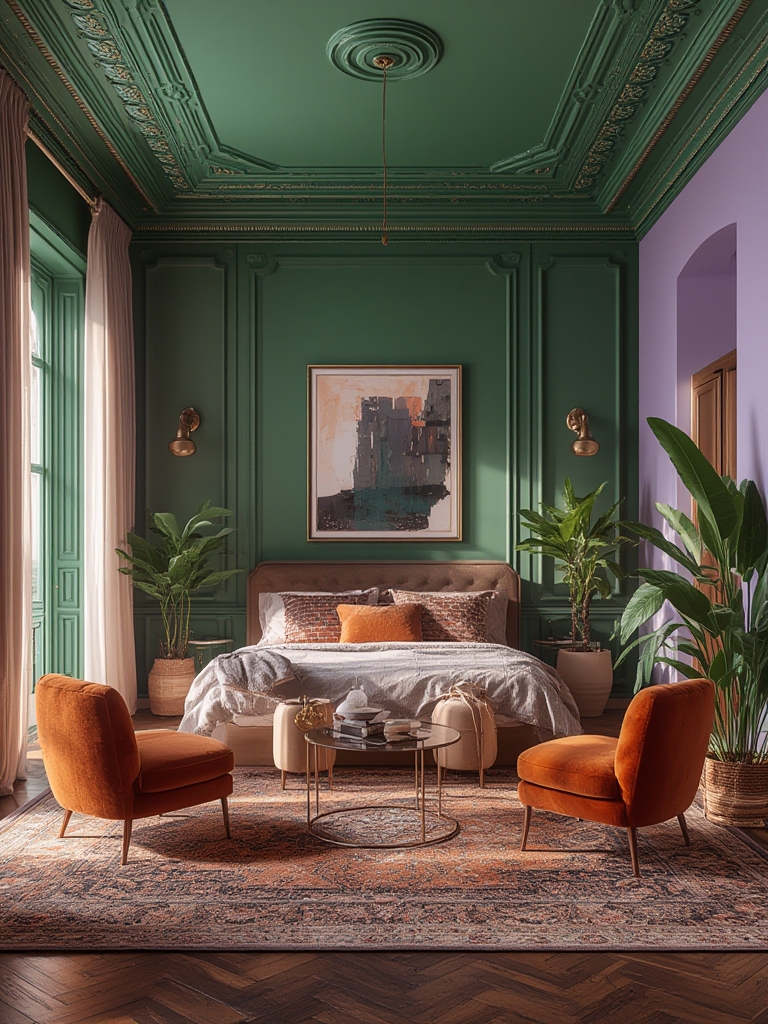
Mood and Sleep Science: Bedrooms in Bold Color
While designer blogs often claim “blues are calming, reds energize,” very few directly cite peer-reviewed research. The science suggests deep cool hues (navy, dusty green, plum) gently support sleep and mood, while bright reds or oranges raise alertness—not always ideal for bedrooms. Indirect lighting and decluttering do more for restfulness than color alone, but avoid strong reds unless you want an energizing effect [source].
Local Codes, Safety, and Health Checks
There are no code restrictions on wall color for single-family homes, but ensure rooms are well-lit and ventilated. Always use low- or zero-VOC paints and ventilate heavily after painting, especially in small or low-light spaces to maintain healthy air quality and avoid issues for children or those with sensitivities.
Advanced Tips
If your room is narrow, consider letting the monochrome extend just up to the picture rail or moldings. For rental-friendly alternatives, layer on a striped runner or experiment with peel and stick textured wallpaper above/below a neutral foundation.
Conclusion
Color drenched rooms deliver immersive design impact, but require extra planning, testing, and maintenance to avoid common regrets. Actual adoption of the trend is still niche, with growth driven by design-forward clients and risk-tolerant homeowners. If you love dramatic color and want your space to feel personal, follow testing and prep rigorously, budget for premium products, and plan your reversibility strategy.
Thinking about trying a color drenched room? Start with a single small space (like a powder room or study) and use our step-by-step guide to control risk and maximize satisfaction. Ready to transform your home? Share your plans or questions in the comments below.
FAQ: Color Drenched Rooms
Does painting a room one solid color really make it feel larger or smaller?
Dark monochromatic rooms (especially with ceilings in the same color) make spaces feel more intimate and can make small rooms look “enveloped”—but in compact areas, very pale, low-contrast palettes may create a subtle feeling of more space. The effect depends entirely on the hue, lighting, and furnishings you choose.
Can I do a color drenched look in a rental property?
Check your lease first. Some landlords allow painting if you return the walls to their original color. For flexible alternatives, use large painted panels, temporary wallpaper, or add a striped area rug to capture the trend without permanent changes.
What paint sheen is best for a color drenched room?
Matte or dead-flat finishes are favored for seamless, cozy looks in low-traffic rooms. Eggshell offers more durability for family spaces. Use satin or semi-gloss for trim and doors to ensure cleaning is easier while staying within the drenched effect.
How hard is it to repaint a drenched room back to white or light neutral?
It can be labor intensive. Most dark drenched rooms require at least two coats of tinted primer followed by two coats of your new color. Factor this into your decision if you like to change schemes often or may sell soon.
Is it ok to use intense, dark paint everywhere—including ceilings and woodwork?
Yes, but do so thoughtfully. Make sure you have strong artificial and natural lighting, and be mindful of trip hazards (such as stairs or doorways) since contrast drops with dark colors. Low-VOC paint and ventilation are also important when painting large surface areas.

[…] your big statement each season: Add a tonal color-drenched wall, a new reclaimed wood side table, or a fresh set of hanging baskets. Timely updates keep your setup […]
[…] architecture, focus on movable textiles, ceramics, and lighting. Try rental-friendly options like color-drenched paint (for maximum ambiance in small doses) and flexible accessories like moss wall art or removable wall […]
[…] with Other Decor Elements Pair textured pillows with smooth textiles such as striped area rugs or color drenched rooms for extra dimension. Want next-level layering? Integrate other sensory elements like moss wall art […]
[…] you’re updating other areas for comfort and mood, see practical guides to creating a color drenched room or adding acoustic wall panels for a more peaceful sleep […]
[…] lifestyle inspiration, see how color trends—like those in this guide to color drenched rooms—can pair with personalized art for a bolder […]